Aşure | Noah’s Pudding
AŞURE: NOAH’S PUDDING RECIPE VIDEO
Note: By clicking on this video, you allow YouTube and Google to access your data. Visit our privacy policy for more info.
Aşure, sometimes called Noah’s Pudding, is one of those foods that exists because a story, a place, and a way of living have overlapped for a very long time.
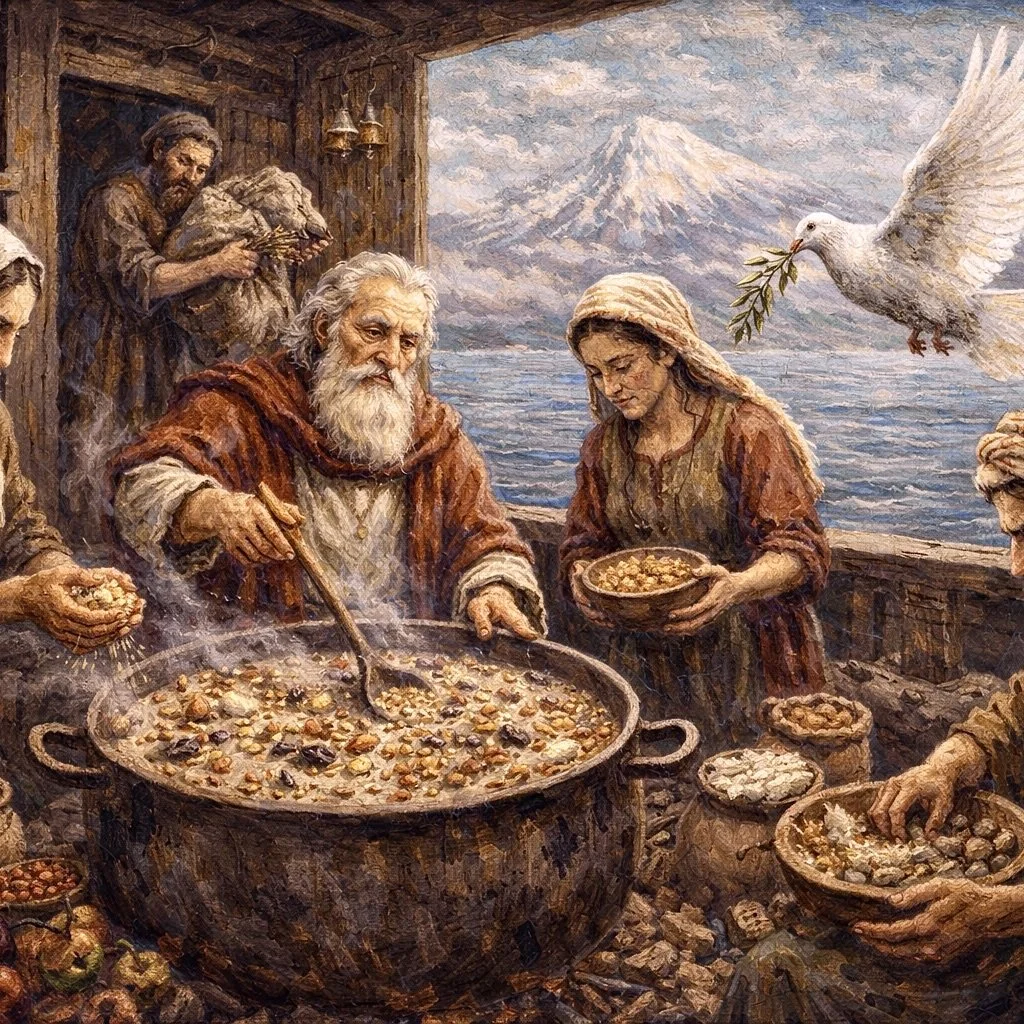
The story attached to Aşure (ah-shoo-reh) is quite familiar to many people around the world: after a catastrophic flood, humanity persevered on a great ship, drifting for months on open water. The last meal on that ship (also known as Noah’s Ark) was a mix of whatever remained in storage: grains, legumes, dried fruits, and nuts cooked together for a final piece of hope that helped them begin life anew. A meal born not from abundance, but survival, gratitude, the fragile yet relentless drive to persevere and rebuild with what’s left, together.
What’s easy to miss is that this story doesn’t belong to one religion, or even to one people. Flood narratives existed in Mesopotamia long before they entered the scriptures of Judaism, Christianity, and Islam. Aşure, as a grain-based dish, took root in the lands that sit closest to that ancient geography: Anatolia, the eastern Mediterranean, parts of the Balkans and the Caucasus. That’s why not every Muslim or Christian around the world makes Aşure, but many communities around Mesopotamia do, regardless of faith.
In Turkish homes today, Aşure is still cooked once a year. It’s always made to share with other households. There is no fixed recipe, but the rules are: make it diverse, make it generous. Some say 7 ingredients, some say 12, my grandma always said it needs to be made with 40 ingredients and shared with 40 people, not as an exact number but to give you a goal to aim for (apparently “40” is a Turkish thing…maybe more on a blog).
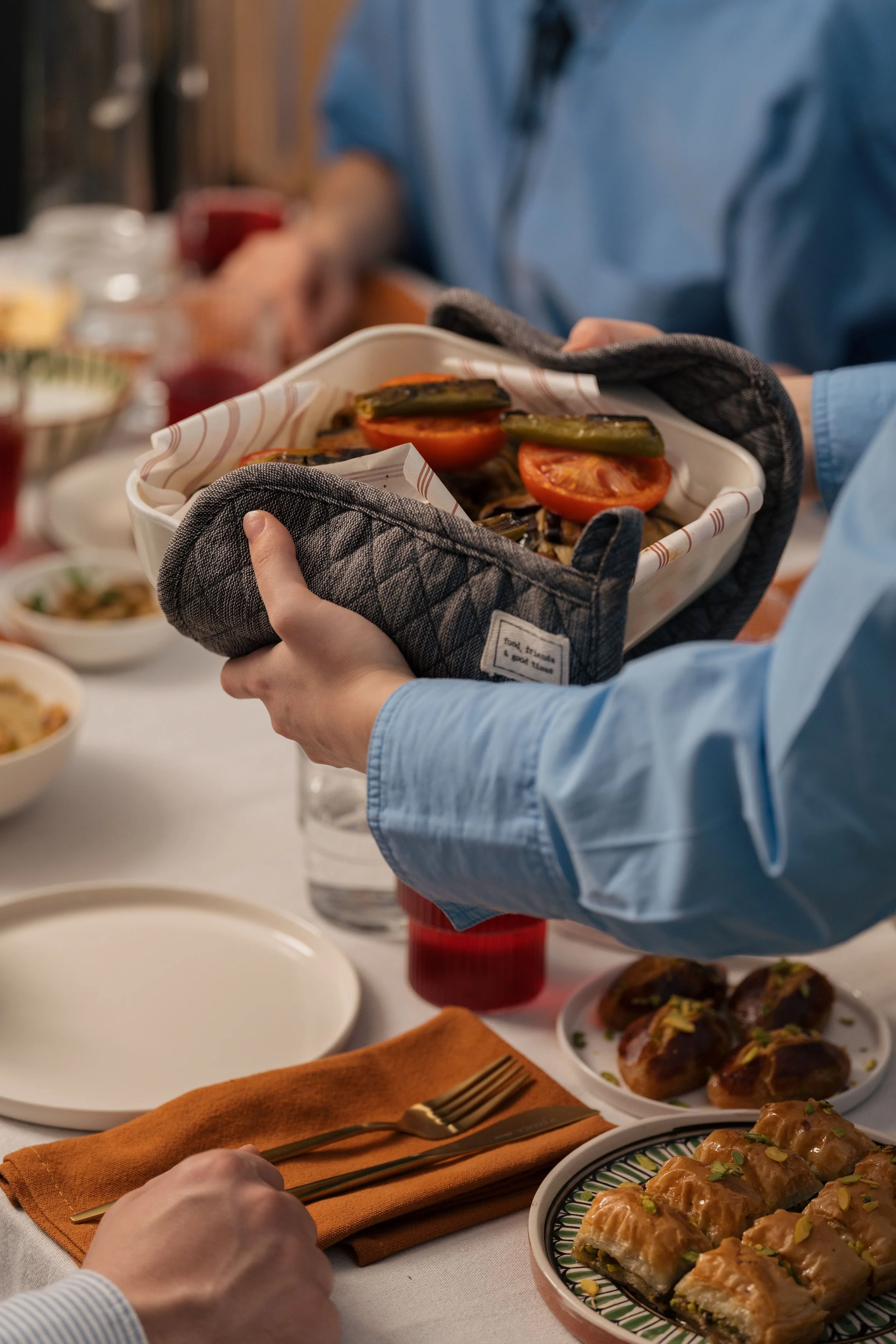
The point is to let many things exist in the same bowl (without any one overpowering the rest), and then to share it with as many people as you can. Aşure season thus becomes a time when people invite their neighbours over for house visits, tea time, or dinner. If they’re busy, they’ll usually drop off a large bowl of Aşure at each of their neighbours, friends and relatives (unless they live too far), and family (if they live apart).
It is one of the few dishes where sharing is not a nice gesture but a part of the ritual of the dish itself.
If you’d like to hear the epic legend the way we heard it growing up, my mother tells her version of the story of Aşure and Noah’s Ark on our blog, just as she told it to us when we were children.
Disclaimer: This recipe takes a day and a half. Not because it is difficult, but because Aşure requires patience. But, it’s a real treasure worth passing along.
Afiyet olsun!
Ingredients
Grains & Legumes
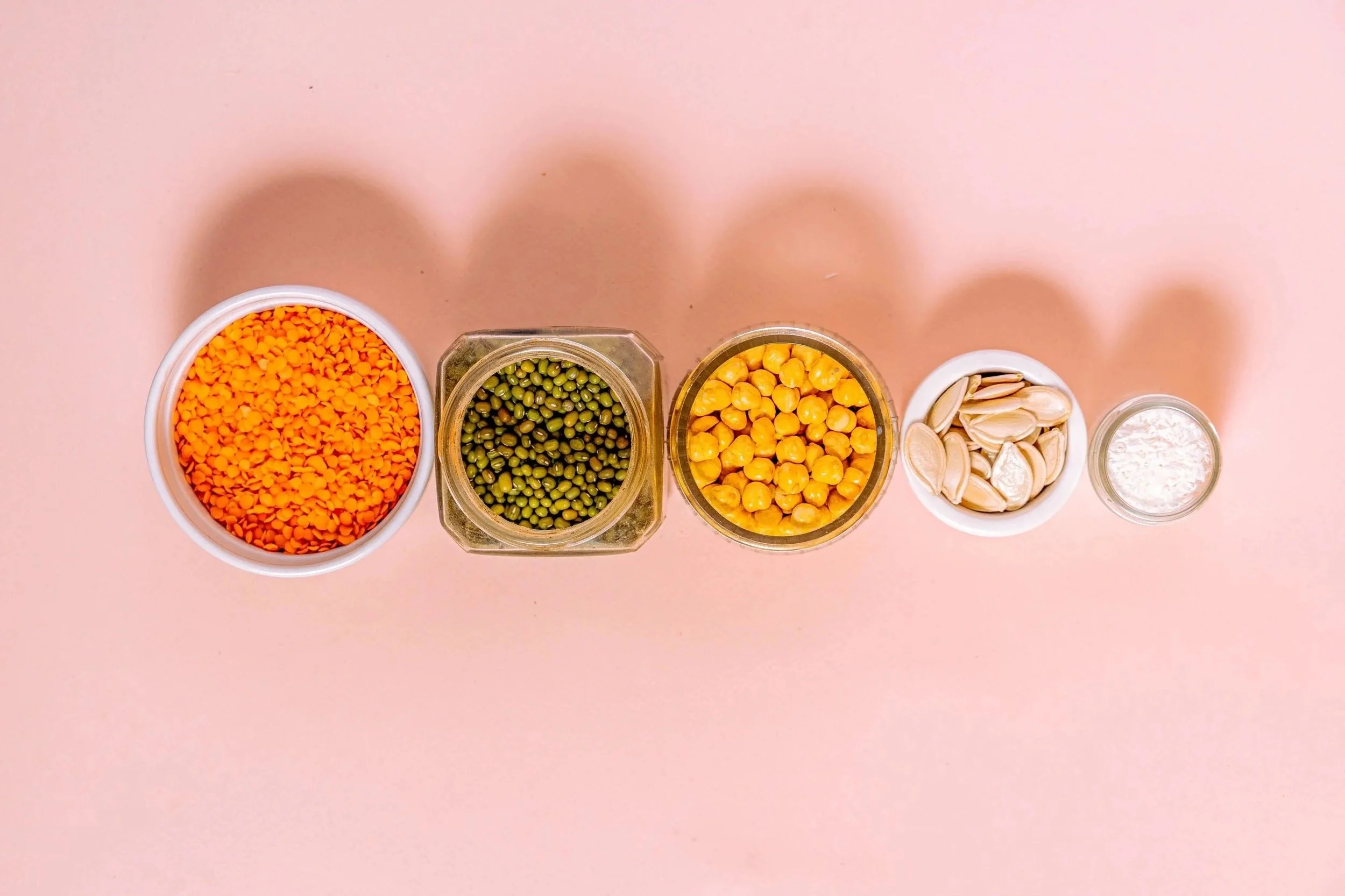
500 g (2½ cups) white wheat
200 g (1 cup) rice
800 mL canned chickpeas (drained)
550 mL canned white beans (drained)
5 L water
Fruits & Aromatics
3 L water
150 g dried apricots (20-25 pieces), diced
100 g dried figs (7-8 pieces), diced
150 g raisins
10-15 cloves
2 cinnamon sticks
2 oranges
1 lemon (zest only)
1 quince
4-5 apples (550-600 g)
2 pears
1 peach
1.7 kg sugar
1 tsp salt
Reusable tea bag or spice pouch (to not have to pick cloves out of pudding later)
Thickener
500 mL water
2 tbsp flour
2 tbsp starch
Decoration (adjust according to personal preference)
Cinnamon powder
Black currants
Pomegranate
Pine nuts
Shredded walnuts
Shredded pistachio
Shredded coconut
(Or any other natural seeds and nuts you love)
Directions
DAY 1: PRE-COOKING
Wash and drain 500 g white wheat.
Bring 5 L water to a boil in a very large pot/cauldron (at least 10 L capacity).
Add the wheat and cook on low-medium heat for 1 hour, until fully tender.
Turn off heat, cover, and let rest for at least 2 hours or overnight for best texture.
DAY 2: PREPARATION
Dice dried figs and apricots; set aside.
Lightly grate the zest of lemon and oranges to remove a couple mm of the bitter, colourful outer skin. Leave a thin orange layer on the peel for the fragrance.
Peel the zested citrus and finely dice their skins; set aside.
Dice orange flesh separately.
Peel and dice apples, quince, and pears; submerge in water to prevent browning. Quince takes longer to cook. Soak it in a different container for easy separation later.
Peel and dice the peach flesh. Put in a separate bowl.
Keep all fruits in separate bowls based on texture and cooking time. Cook the fruits according to this sequence:
Dried figs (first)
Apricots
Raisins
Orange and lemon skins
Quince
Orange flesh
Apples and pears
Peach
Prepare a separate 5 L fruit pot for cooking.
COOKING
Place cinnamon sticks and cloves into a tea bag/spice pouch, tie, and add to the fruit pot.
Add 3 L water and boil for 10 minutes to infuse the spices.
Fruit Pot:
Begin with dried fruits: figs, apricots, raisins. Wait 3 minutes between each.
Then add citrus skins, quince, oranges, apples and pears, peach. Wait 2 minutes between each batch.
Boil all fruits together for 3-5 minutes, until tender (but not translucent.)
Add 1.7 kg sugar and 1 tsp salt, simmer for 10 minutes on low heat.
Grain Pot:
While infusing the spices in the fruit pot, reheat the pre-cooked wheat from Day 1.
Add rice and canned chickpeas, simmer 6-8 minutes until the rice softens.
Add canned white beans, simmer 8-10 more minutes.
Pour the contents of the fruit pot into the large 10 L grain pot.
Thickening:
Whisk 2 tbsp flour + 2 tbsp starch + 500 mL water until thoroughly combined.
Drizzle into the pot slowly while stirring continuously to avoid clumps.
Simmer 10 more minutes, stirring occasionally to prevent the bottom from sticking.
Turn off the heat and rest for 20-30 minutes.
Portioning and Cooling:
Ladle Aşure into bowls while still warm, leaving about 0.5 cm space from the rim for decorations (later).
Let cool to room temperature. Then store in the fridge.
DECORATION:
Once Aşure fully cools in the fridge, it is time for decoration.
Now the ritual becomes personal.
Put on some music.
Choose your toppings.
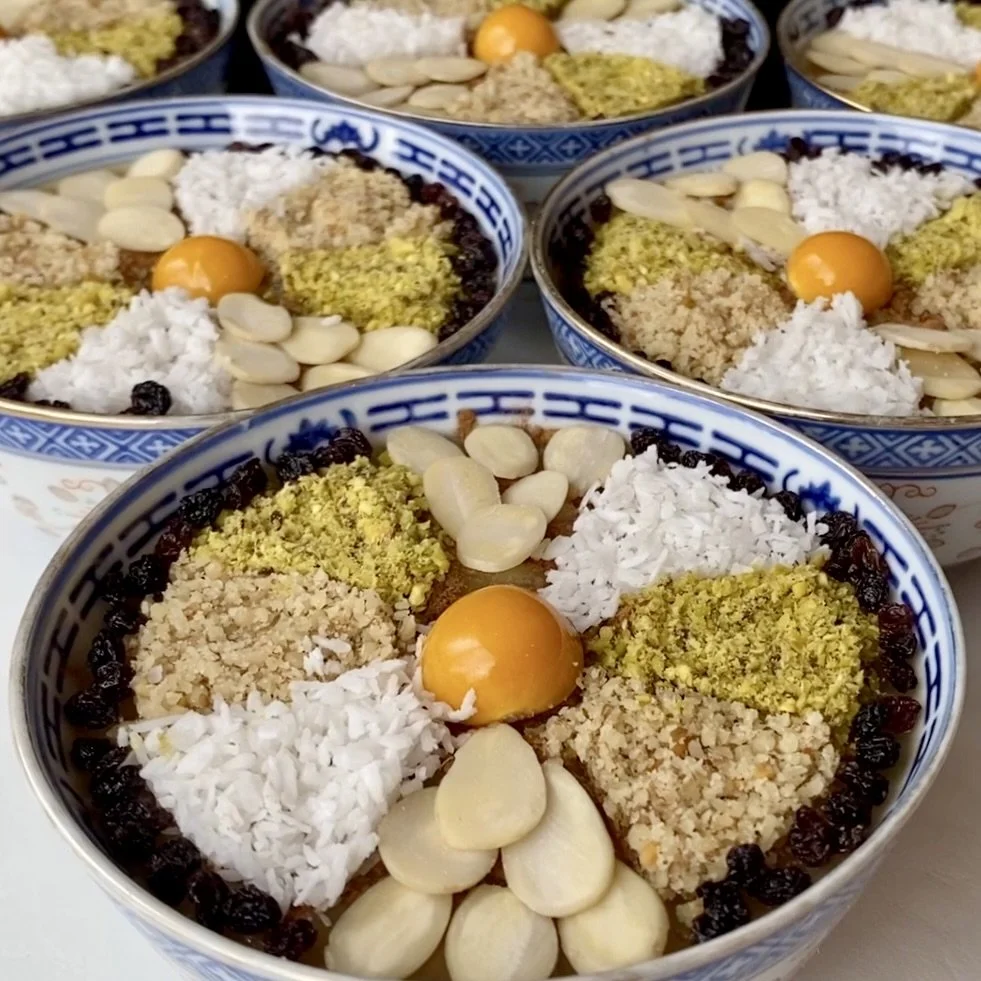
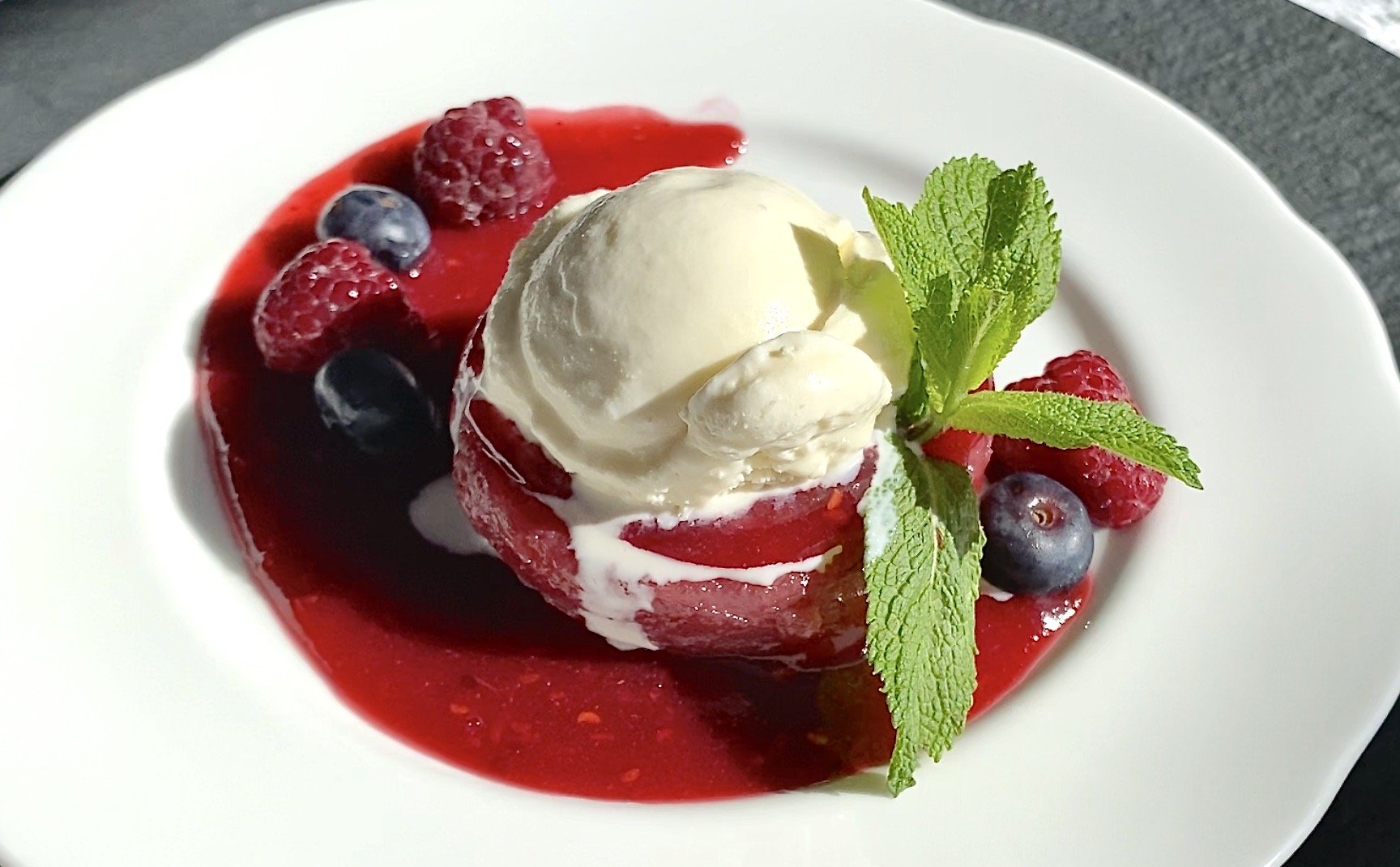
Decorate each bowl as its own small artwork.
Decoration is not optional in Aşure. It’s part of the recipe, just more personal.
Each bowl reflects the hands and imagination of the person who made it.
SERVING:
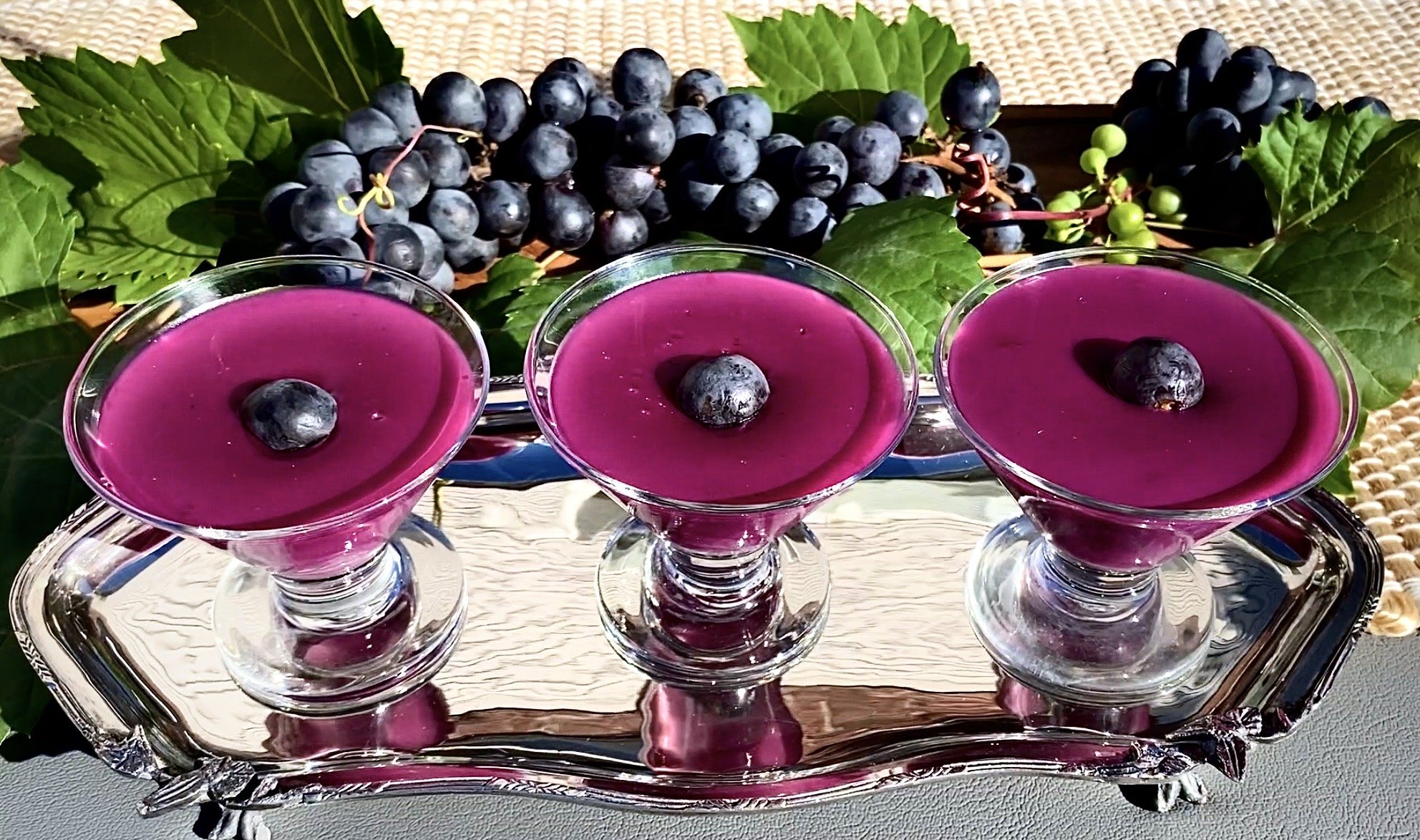
Traditionally, Aşure is served in crystal, glass, or porcelain bowls that are a bit more decorative than your average pudding bowl. Bowls you give out to your neighbours should be larger (or more numerous) to account for the household. Everyone should get a taste of the Aşure.
Pomegranate, cinnamon powder, crushed walnuts, and black currants are Istanbulites’ preferred toppings. Although, Aşure is made and served differently in different climates and geographies across Anatolia and the neighbouring regions of Levant, Caucasus, and Balkans.
The most important thing about this dish is to share it with as many people as possible (neighbours, friends, even casual acquaintances) as a quiet gesture of appreciation, gratitude, and wish for peace and abundance for the year ahead.
[Notes from the Kitchen]
Why so many ingredients?
Aşure is built on diversity. So, balance is essential. Therefore, no single flavour should dominate the dish.Why cook fruits and grains separately?
Fruits and grains release starch and sugar differently. Cooking them separately prevents muddling textures and flavours. We also take care to cook the tougher fruits and grains first, then gradually add the softer ones to even out the textures. Separate and sequential cooking like this lets you control the final texture. Otherwise, (if you put everything in at once) by the time the tougher ingredients soften, softer/smaller ones will turn to mush.Pre-Cooking the Wheat:
Wheat and legumes need to be cooked the day before (1) because they take much longer to cook than the other ingredients, and (2) because they need to be rested over night to soak up as much water as they can before combining with the other ingredients. This allows for precise measurements for each ingredient (especially water) without having to tweak and adjust the consistency every time.
We pre-cook the wheat the night before, and use canned legumes for convenience. If you’d like to cook the legumes yourselves, please cook them the night before but separately from the wheat as they soften at different rates.Sweetness:
Aşure should be gently sweet, not heavy. If your fruits (especially dried ones) are on the sweeter side, gently reduce the added sugar in the recipe. This also applies if you choose to add only dried fruits instead of fresh fruits. Sugar is one of the last ingredients added into our Aşure, so you can check the sweetness and adjust accordingly before you turn off the stove. Keepin mind, the sweetness will be strongest when the Aşure is hot, and the taste will get lighter as it cools.Consistency:
Aşure thickens further as it cools. So, stop cooking while it is slightly looser than your final desired texture.Sharing is part of the recipe
Aşure is traditionally never made just for oneself. Even a small bowl shared is deeply significant for neighbourly bonds. In a gist, taking a bowl of Aşure to your Turkish neighbour says, “Thank you. I care about you. I value your presence in my life, and I wanted to remind you that I’m here for you, too.”